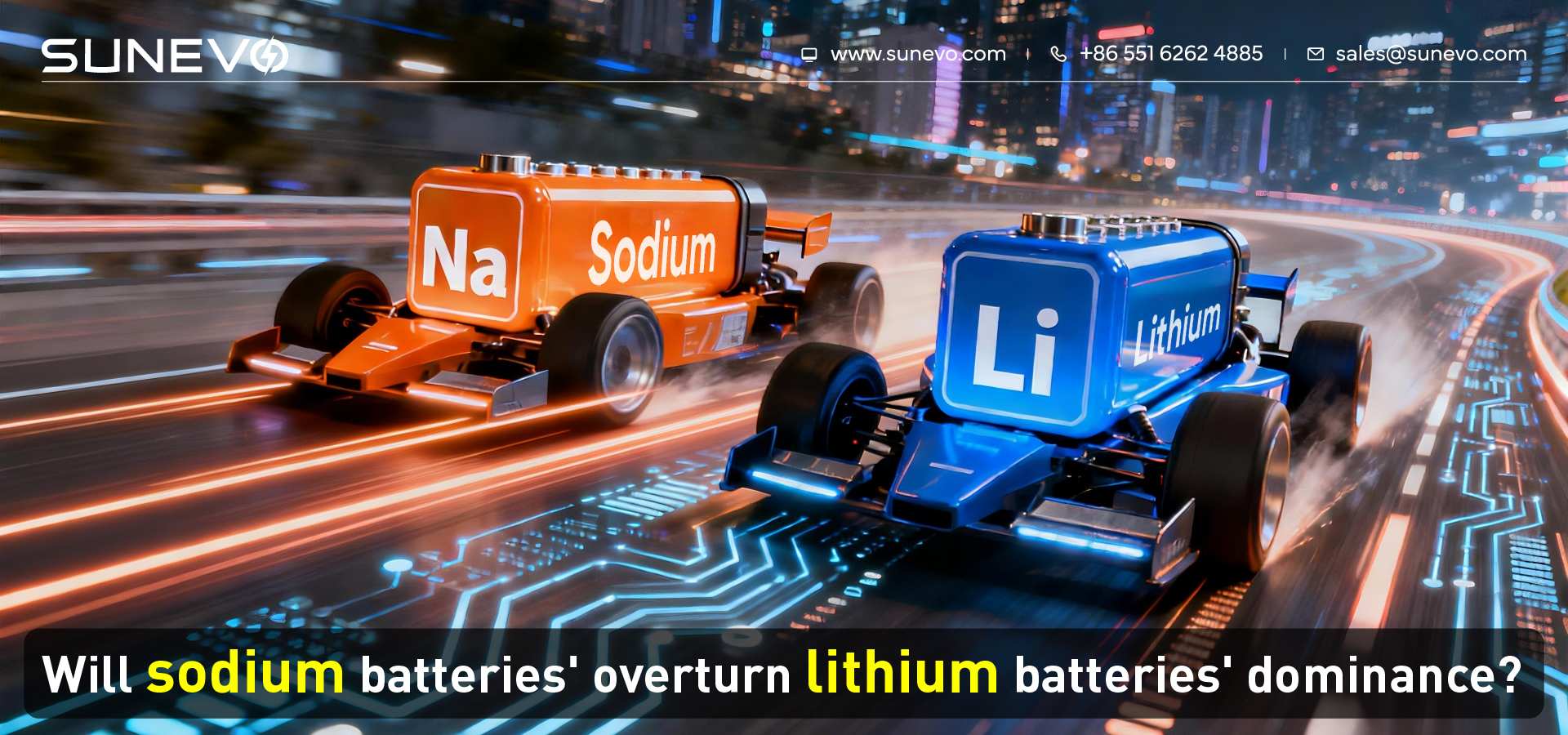
What is the current state of the global sodium battery industry? Will it reshape the current market landscape dominated by lithium batteries?
Regaining Market Attention
Sodium batteries are rechargeable batteries that use sodium ions (Na+) as charge carriers. They operate primarily by the movement of sodium ions between the positive and negative electrodes, functioning similarly to lithium batteries.
In reality, sodium batteries are not a novel concept. Research into sodium batteries began almost simultaneously with lithium batteries in the 1970s. However, development stalled due to constraints in research conditions and other factors. Meanwhile, lithium batteries rapidly gained traction, achieving comprehensive coverage across consumer electronics, computers, communication networks, electric vehicles, and other sectors.
The current surge in battery raw material prices is placing immense pressure on rapidly expanding power battery manufacturers. Data indicates that the spot price of lithium carbonate averages around 89,000 yuan per ton, representing a roughly 67% increase since the beginning of the year. Similarly, the spot price of lithium hydroxide averages approximately 89,500 yuan per ton, surging by 80% year-to-date. This price hike is primarily driven by the rapid expansion of the electric vehicle and energy storage markets, which have fueled a sharp increase in demand.
Approximately 70% of the world's lithium resources are concentrated in South America, while China relies on imports for 80% of its lithium supply. To address this critical resource constraint, relevant companies are turning their attention to sodium batteries. It is understood that sodium batteries primarily use sodium salts as electrode materials, which are more abundant and less expensive than lithium salts. “Sodium chloride can't be hyped up because there's so much salt,” stated Zeng Yuqun.
Currently, about 20 companies worldwide are engaged in sodium battery R&D, including UK-based Faradion, Japan's Kishida Chemical, US firm Natron Energy, and China's Zhongke Haina, Sodium Innovation Energy, and Starry Sky Sodium Battery. In June 2018, Zhongke Haina launched China's first sodium battery-powered low-speed electric vehicle, marking a new chapter in sodium battery development.
Industrialization Faces Challenges Like Stability
“Sodium batteries can utilize existing lithium battery materials, cell production processes, and manufacturing equipment, presenting no significant bottlenecks for mass production,” Hu Yongsheng, a researcher at the Institute of Physics, Chinese Academy of Sciences, told reporters. Sodium batteries have gradually transitioned from laboratory research to practical applications. China currently leads globally in sodium battery product R&D, manufacturing, standardization, and market promotion, with the industry poised for commercial deployment.
So, will sodium batteries eventually overtake lithium batteries as the dominant technology? From the demand side, market requirements for power batteries can be categorized into four dimensions: higher capacity, faster charging speeds, enhanced safety, and lower costs. It is understood that the current energy density of sodium battery cells ranges from 90 to 150 Wh/kg. This still lags significantly behind lithium iron phosphate batteries (150-180 Wh/kg) and ternary lithium-ion batteries (200-280 Wh/kg). However, sodium batteries hold their own—and even demonstrate advantages—in areas such as charge/discharge rate performance, high/low temperature performance, and cycle life. Furthermore, sodium-ion batteries use little to no rare metals. Both the cathode and anode current collectors can utilize inexpensive aluminum foil, enhancing battery safety while further reducing costs.
However, low raw material supply costs do not automatically translate to lower overall battery costs. “Sodium batteries aren't cheap right out of the gate. The current supply chain is still small and immature, potentially making them more expensive than lithium batteries,” Zeng Yuqun emphasized that sodium batteries still require a development process.
Xie Honghe, chief nonferrous metals analyst at Zhongtai Securities Research Institute, also pointed out that the industrial application of sodium batteries faces a series of challenges. These include the stability of electrolytes, electrodes, and electrolyte interfaces, as well as the need for further research and solutions regarding supporting industries and the recyclability of waste batteries.
Positioned as “High-Safety Energy Storage Batteries”
Industry insiders maintain that lithium-ion batteries remain the mainstream technology for future new energy vehicle power batteries.
“Global lithium reserves can meet the development needs of new energy vehicles, while lithium-ion batteries offer superior performance,” Xie Honghe noted. He believes sodium batteries may find future applications primarily in energy storage, low-speed new energy vehicles, and small-power sectors, unable to fully replace lithium batteries in new energy vehicles.
Hu Yongsheng elaborated that sodium-ion battery products will primarily target applications below 150Wh/kg, offering energy storage batteries with wider temperature ranges, enhanced safety, higher rate capabilities, and lower costs. They can serve as a beneficial supplement to support and safeguard lithium battery development, partially alleviating constraints on energy storage battery growth caused by lithium resource shortages, while gradually replacing lead-acid batteries. In his view, sodium batteries are currently positioned as the most cost-effective high-safety energy storage solution. Once scaled up, they are projected to achieve the price point of lead-acid batteries while matching the performance of lithium batteries.
Notably, the recently jointly issued “Guiding Opinions on Accelerating the Development of New Energy Storage Technologies (Draft for Comment)” by the National Development and Reform Commission and the National Energy Administration emphasizes the need to pursue diversified energy storage technologies and accelerate large-scale pilot demonstrations for technologies like flywheel energy storage and sodium batteries. This marks the first time sodium batteries have been explicitly included in national-level development plans, receiving strong policy backing.
SunArk has now developed new sodium battery products. While they may not match the surge in orders seen for lithium batteries, they have garnered significant attention. We warmly welcome all medium-to-large-scale purchasers and installers to collaborate with us in promoting these innovations!



 réseau ipv6 pris en charge

 English
 Deutsch
 italiano
 español
 português
 العربية
 日本語
日本語 Polski
 ไทย
ไทย